
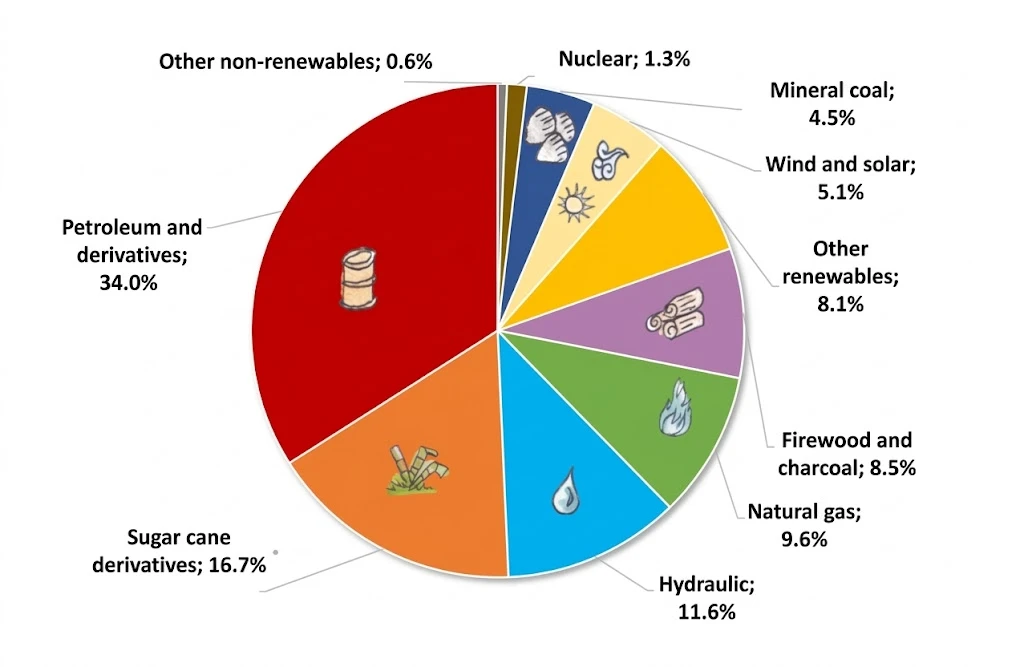
According to the Energy Research Company – EPE, a public company created by Federal Law n. 10.847/2004, the Brazilian energy matrix, understood as the set of energy sources used, for example, to power cars, machinery, industries, heat food, and generate electricity, is primarily composed of non-renewable energy sources, among which is natural gas (CH4, methane). See the chart below:
BRAZILIAN ENERGY MATRIX
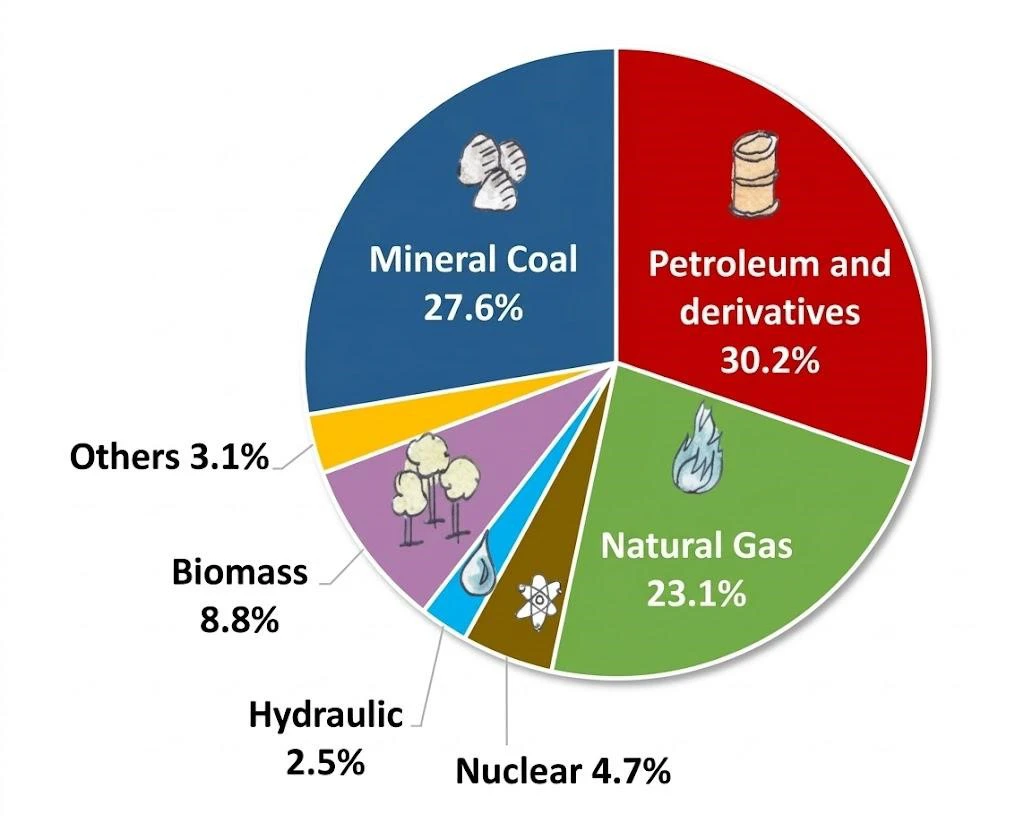
In comparison to the world energy matrix, non-renewable sources represent an even larger proportion, compared to hydraulic, nuclear, biomass, among others, as shown:
WORLD ENERGY MATRIX
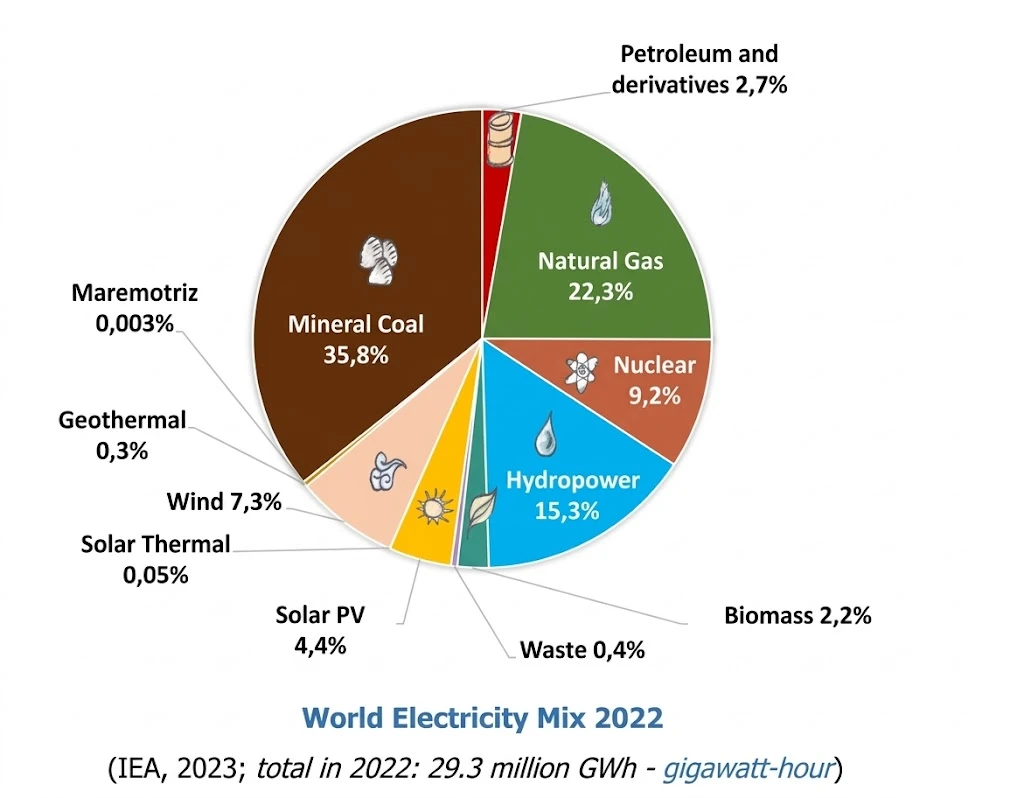
When analyzing not the energy matrix, but the electricity matrix (understood as the set of available sources for electricity generation), non-renewable sources like natural gas are preponderant in the global scenario, with the latter being responsible for 22.3% of electricity production worldwide:
WORLD ELECTRICITY MATRIX
However, in the national context, natural gas is responsible for only 6.3% of electricity production, as seen below:
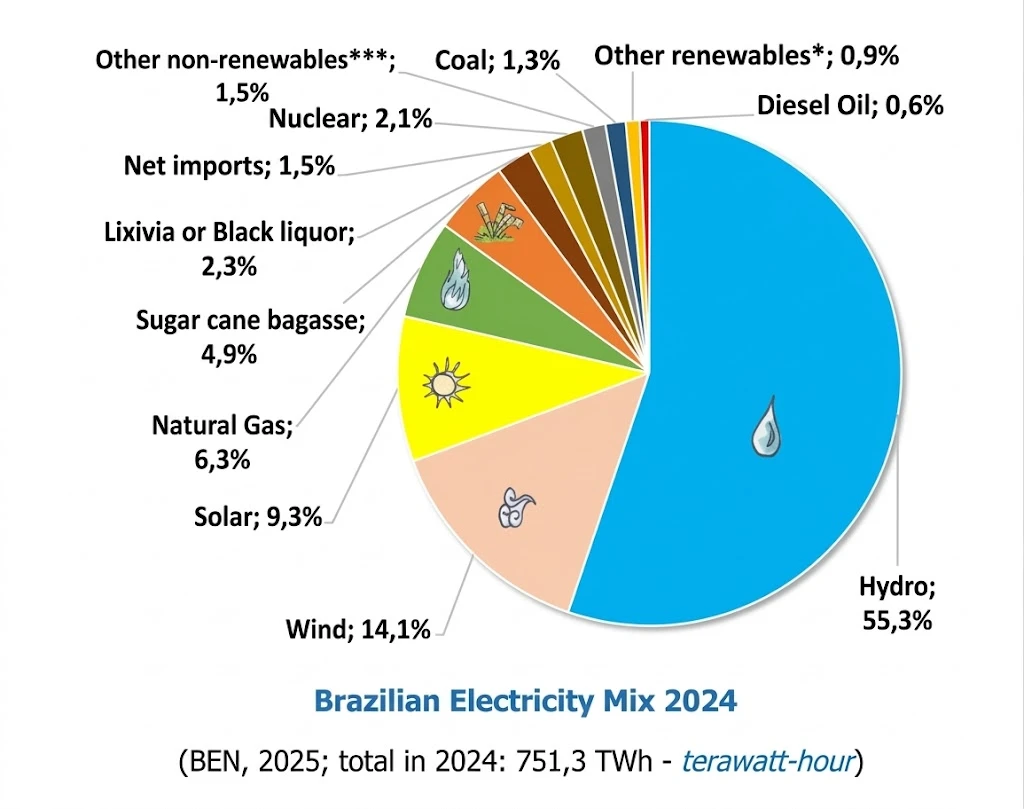
Although it is an excellent Brazilian particularity, compared to the rest of the world, the high production of electricity from renewable sources such as hydraulic (55.3%), the use of natural gas is far from reaching its full potential in the Brazilian electricity sector.
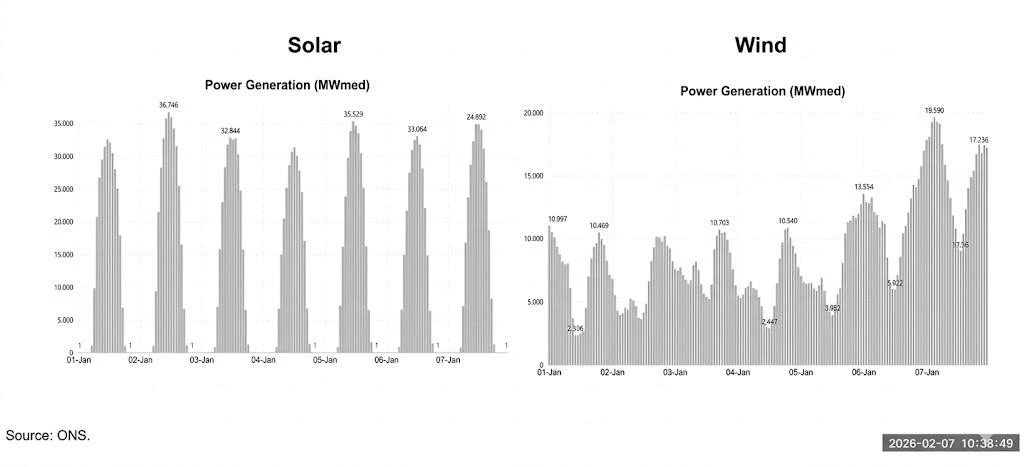
This occurs because, despite the high amount of energy produced by perennial sources such as hydraulic power, daily energy demand peaks are not supported by the production of hydroelectric plants or other forms of generation, such as distributed generation (solar, wind, and biomass). This fact demands the constant intervention of thermoelectric plants, powered by natural gas, to regulate the National Interconnected System, according to provision of the National System Operator – ONS.
See, for example, charts provided by the National System Operator – ONS, which show the daily variation of intermittent energy production from distributed solar and wind generation:
An example of this is the phenomenon called the “Duck Curve” regarding differences in daily electricity demand. In the morning, the load gradually increases, and solar generation slowly begins. At midday, production peaks, drastically reducing the net load, the “duck’s belly.” By late afternoon, solar generation drops, and energy demand rises, forming the “duck’s neck,” a ramp that pressures the system to respond quickly. This creates two main risks: excess generation, which can cause instability and force the shutdown of plants (a phenomenon called curtailment), and the need for rapid ramps of firm power, which increase operational costs and emissions.
See the chart:
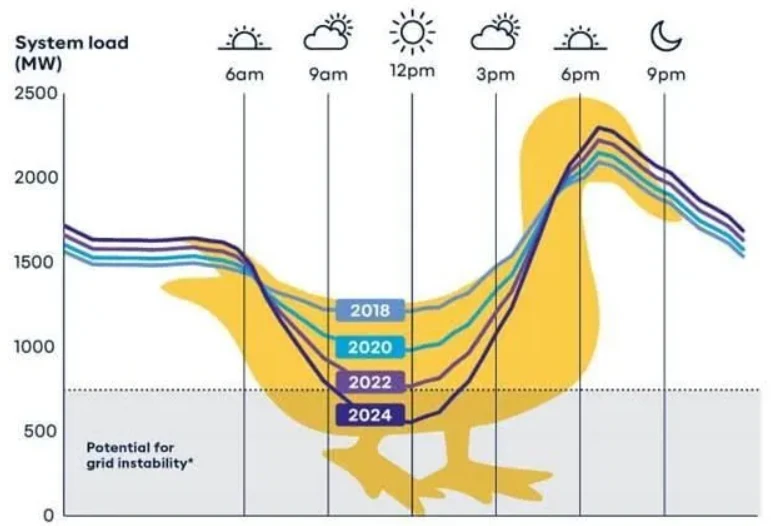
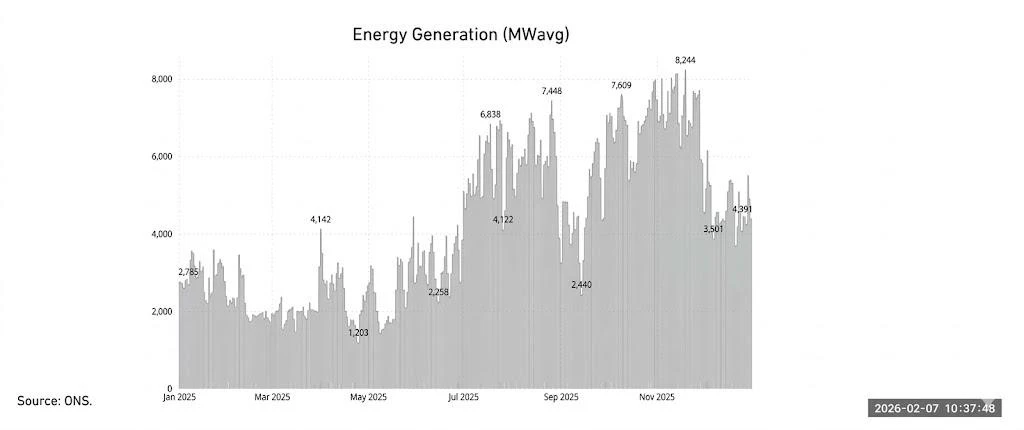
It is during the “duck’s neck” period that thermoelectric plants primarily come into operation to stabilize the national electrical system. There is no escape from their intervention, which makes the construction of thermoelectric plants an indispensable element for the proper functioning of the system.
So much so that these plants have two modalities: base-load plants (which operate continuously, with a high capacity factor, firm supply contracts, and low operational flexibility) and peak-load plants (which are activated at critical moments with high operational flexibility and rapid startup). Below, the chart provided by the National System Operator clearly demonstrates the indispensable and variable activation of gas-fired thermoelectric plants:
Whether one is favorable to thermal plants or not, the fact is that the integration of the gas and electricity sectors is unavoidable and will demand increasing attention, as well as the need for better practical (infrastructure) and legal (regulatory) interconnections.
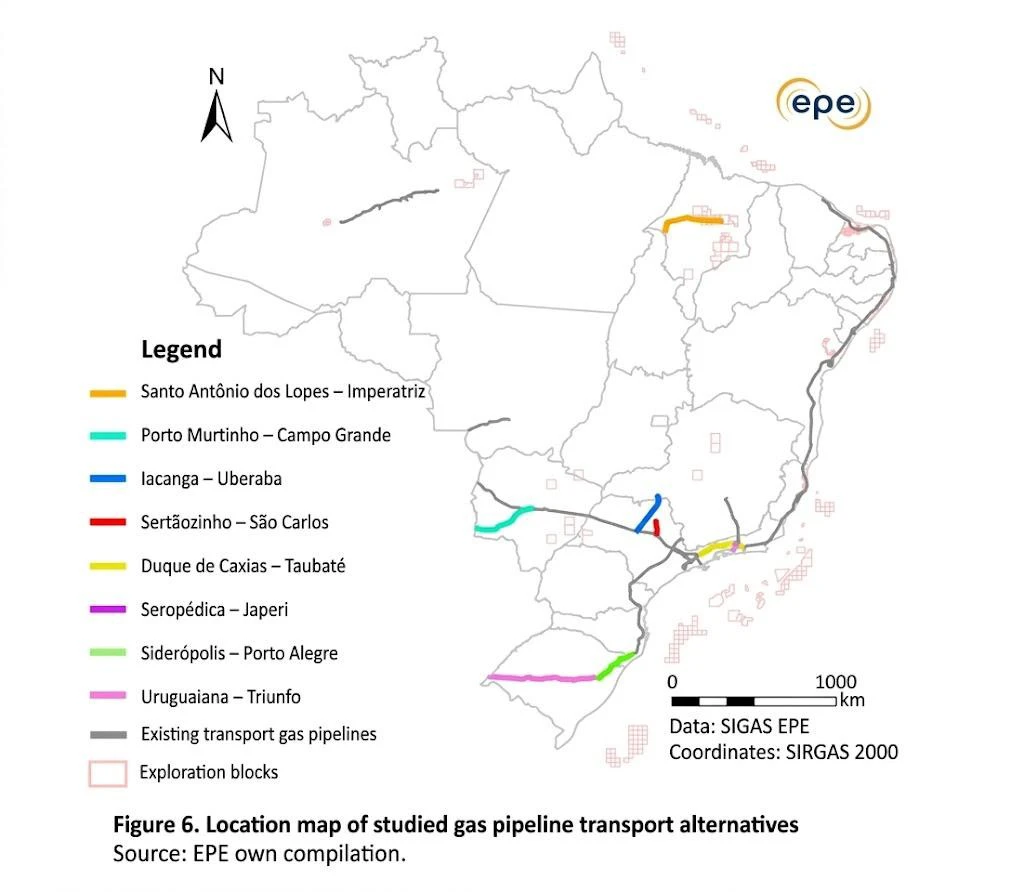
In Brazil, investment in infrastructure in the gas sector is reduced, and it is undeniably deficient compared to other countries. For example, Brazil has only 9,306 km of physical gas infrastructure, whereas Argentina has 30,000 km and the United States has 485,000 km.
The distribution of the gas network in Brazil can be represented as follows, according to the Energy Research Company – EPE:
In addition to infrastructure, gas regulation is a factor that needs to be improved, despite the recent Law n. 14,134, of April 8, 2021 (“Gas Law”), which, despite addressing issues of transport, import, storage, distribution, and commercialization, does not overcome the constitutional bottleneck set forth in paragraph 2 of article 25 of the Federal Constitution, which determines state competence for the exploration of piped gas services, as follows:
Federal Constitution:
Art. 25. States shall organize and govern themselves by the Constitutions and laws they adopt, observing the principles of this Constitution.
§ 2. It is incumbent upon the States to exploit directly, or by concession, local piped gas services, in accordance with the law, with the issuance of provisional measures for their regulation being prohibited.
This constitutional provision means that each State of the Federation can have its own legislation on the exploration of piped gas services, creating state regulatory subsystems and hindering the necessary federal treatment of the issue.
Be that as it may, the integration of the gas and electricity sectors is indispensable, given the constant hydrological risk in electricity production and the oscillation of distributed generation, so that thermal plants can enhance their function as a reliable operational reserve and complement in electricity production.
Legal action in the sector, in conjunction with a specific technical area, combined with the political will of the legislator, is the way to enable the development of the sector and its integration with the electricity sector.